
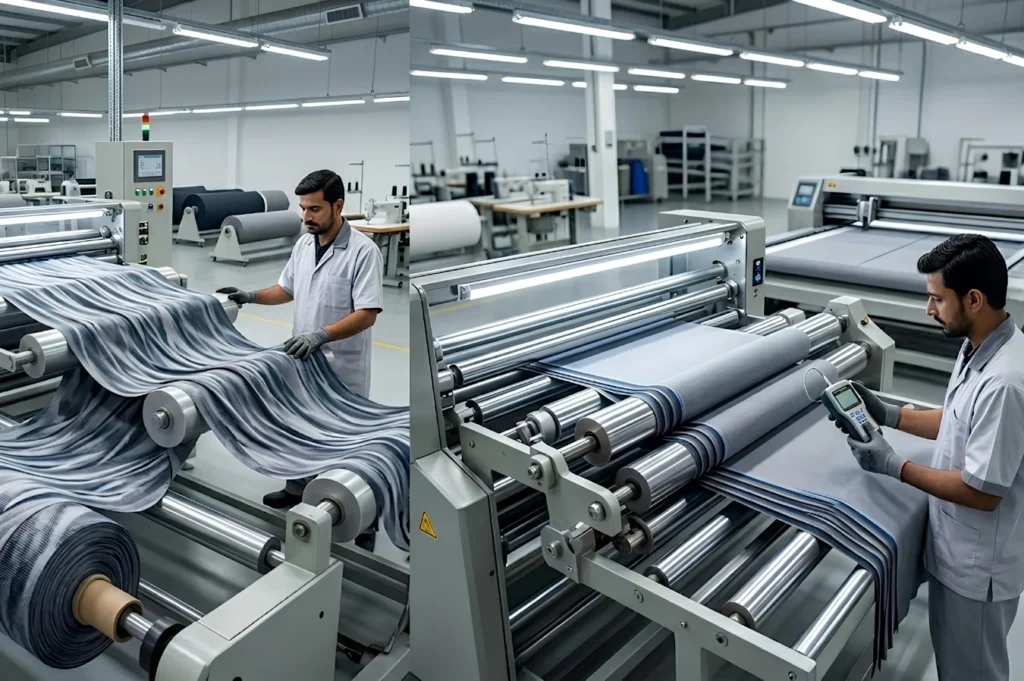
Cut & Sew Manufacturing
High-Capacity Precision Assembly & Flatlock Stitching Lines
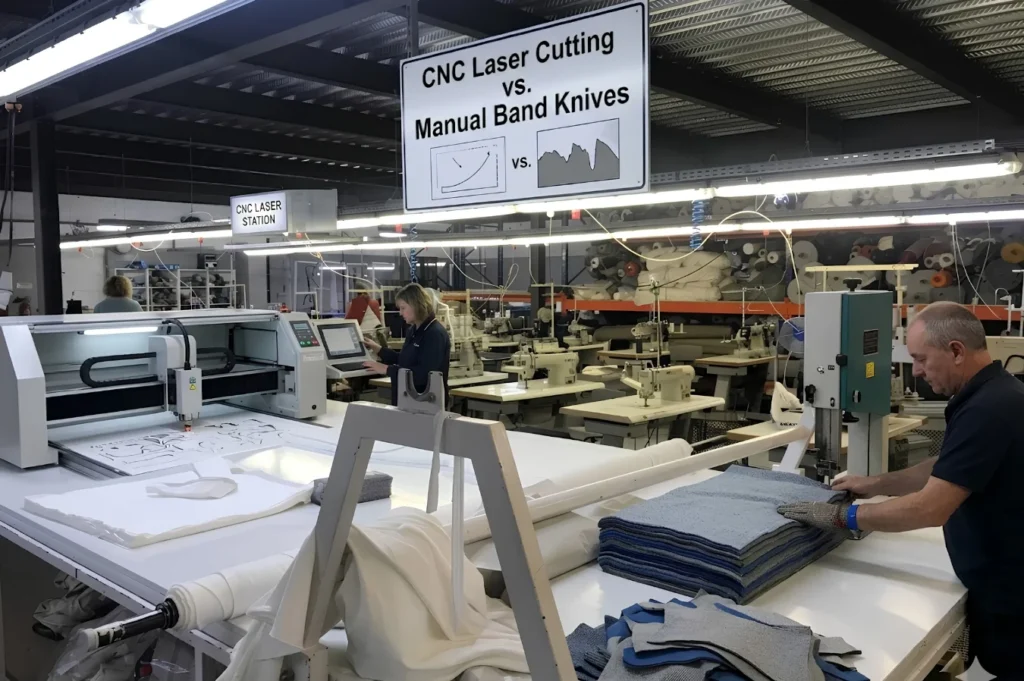
The Financial Reality of the Cutting Room Floor
Cut and sew manufacturing is not simply "putting clothes together." It is a strict mechanical science. It requires balancing fabric yield algorithms, stitch tension matrices, and rigorous quality control (AQL) at every workstation on the factory floor.
At Rijiz, we operate an industrial cut and sew factory built for brands that demand precision over speed. This document breaks down the mechanical realities, the production models, and the exact machinery protocols required to execute a high-volume production run flawlessly.
Amateur brands spend months obsessing over design but completely ignore the cutting process. In reality, the cutting room is where the profit margins of your entire collection are determined. Fabric is the single highest cost variable in garment production. How that fabric is laid out, tensioned, and sliced dictates your raw material waste.
What Our Cut & Sew Manufacturing Includes
Industrial blueprints, measurement POM spec charts, bill of materials (BOM), and artwork callouts formatted for factory assembly lines.
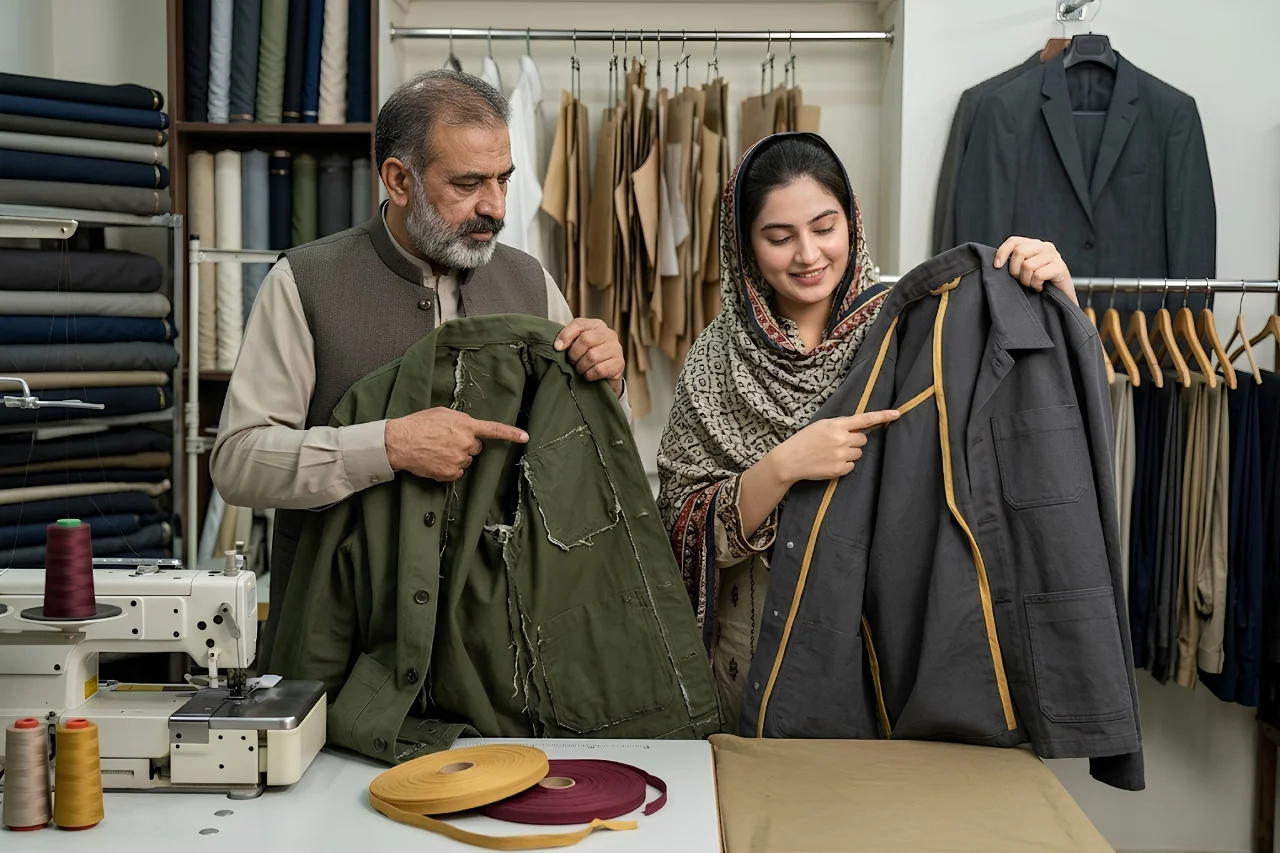
Binding and Taped Seams
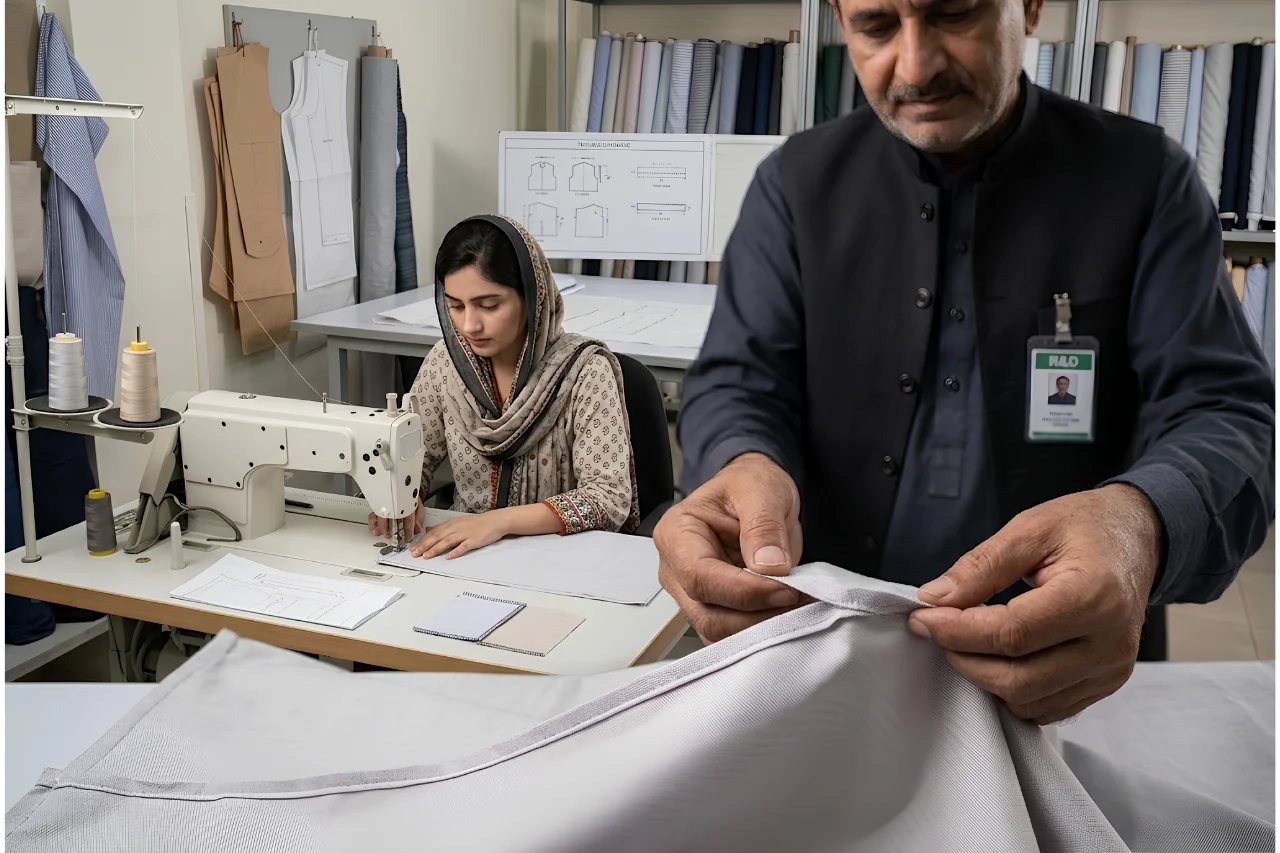
For unlined garments like luxury chore jackets or high-end trousers, exposed interior seams are unacceptable. We utilize specialized binding folders on the sewing machines to wrap the raw interior edges in a contrasting cotton or satin tape. This not only prevents fraying but provides a highly premium aesthetic when the garment is unbuttoned or flipped inside out.
Clean Finishing and French Seams
For lightweight wovens and shirting, we deploy French seams. This is a double-sewing technique where the raw edge is folded in on itself and stitched down a second time, completely enclosing the fraying edge within the seam itself. It requires twice the labor of a standard overlock stitch but results in an incredibly durable, clean interior finish.
In-Line Stitch Audits
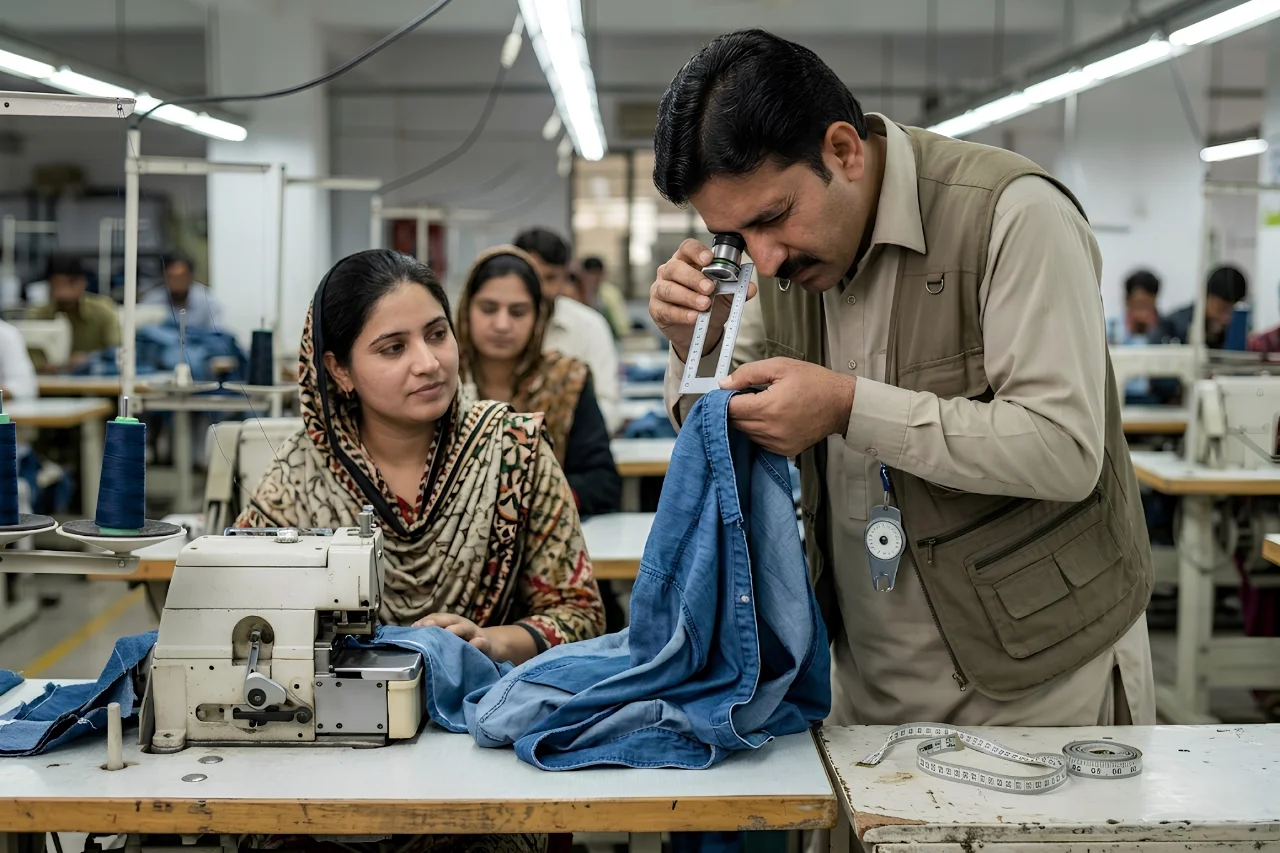
During the active sewing phase, our floor managers conduct random, continuous in-line audits. They pull garments directly off the sewing stations to measure Seams Per Inch (SPI) and inspect for thread tension issues. If a machine is dropping stitches or puckering the fabric, the entire line is halted. The machine is recalibrated immediately before the defect can replicate across the rest of the batch.
The Golden Sample Benchmark
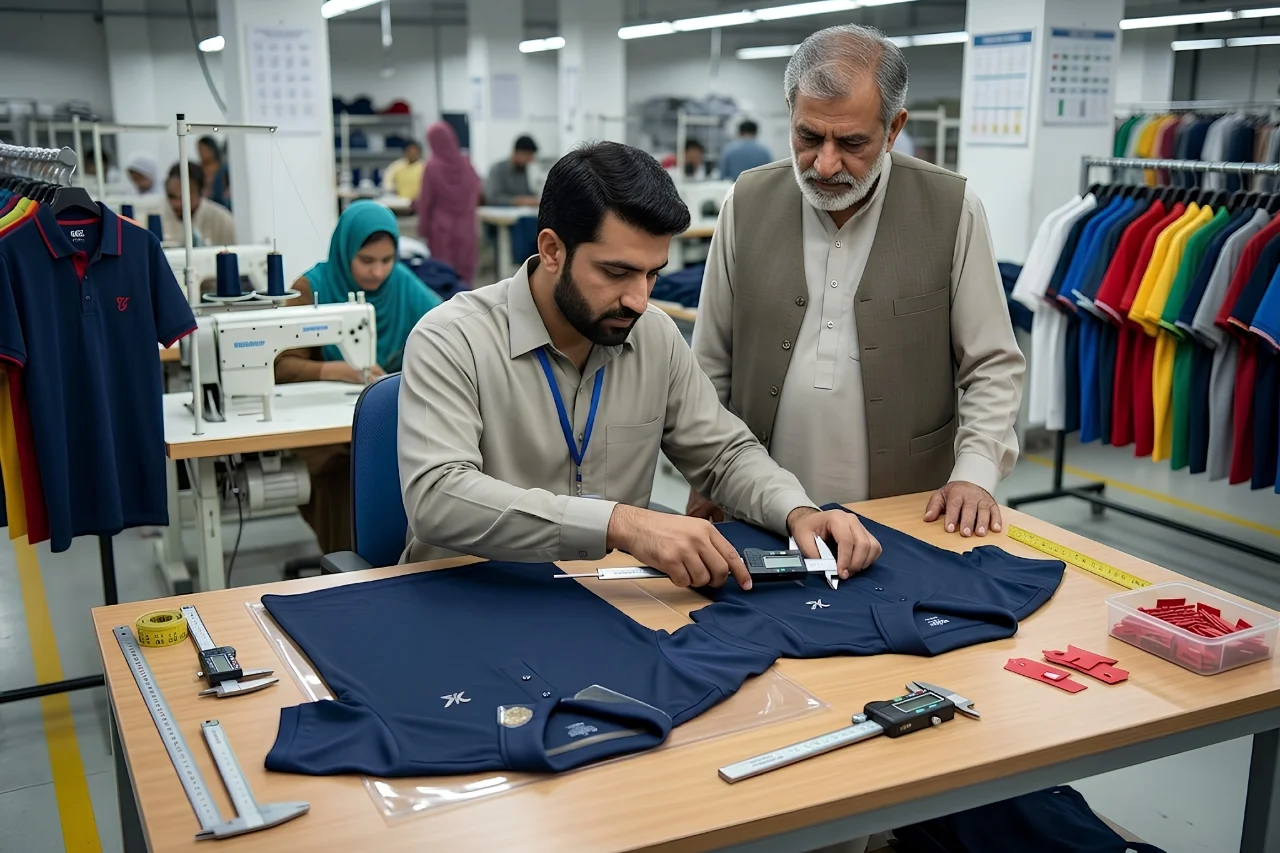
Quality is not subjective; it is contractual. Before bulk production begins, you sign off on a physical Pre-Production (PP) sample. This physical garment is placed directly on the factory floor. Our QC inspectors measure the bulk garments against this "Golden Sample." If a collar width on the bulk run deviates from the Golden Sample beyond the allowed mathematical tolerance (e.g., +/- 0.25 inches), the unit is instantly rejected and marked as a defect.
Our Cut & Sew Manufacturing Process
Consultation & Technical Intake
We gather design concepts, physical samples, target market fit, and raw fabric specifications.
Sampling & Pre-Production
Engineering full physical prototypes for cut & sew manufacturing validation before bulk production.
Bulk Manufacturing
Automated high-capacity factory line assembly using specialized 4-needle flatlock and sewing machinery.
AQL Inspection & Worldwide Delivery
100% Quality control audit, barcoded polybag packing, and door-to-door worldwide shipping.
Frequently Asked Questions
Ready to Turn Your Concept into a Production-Ready Blueprint?
Connect directly with our garment engineering team to discuss spec details, tech packs, and sample timelines.